Beyond Kinetic Intercepts: The Rise of Microwave Dominance in Drone Warfare
As drone swarms evolve, the military is shifting toward high-power microwave systems to neutralize threats without the cost of kinetic missiles.
The Shift to Electromagnetic Defense
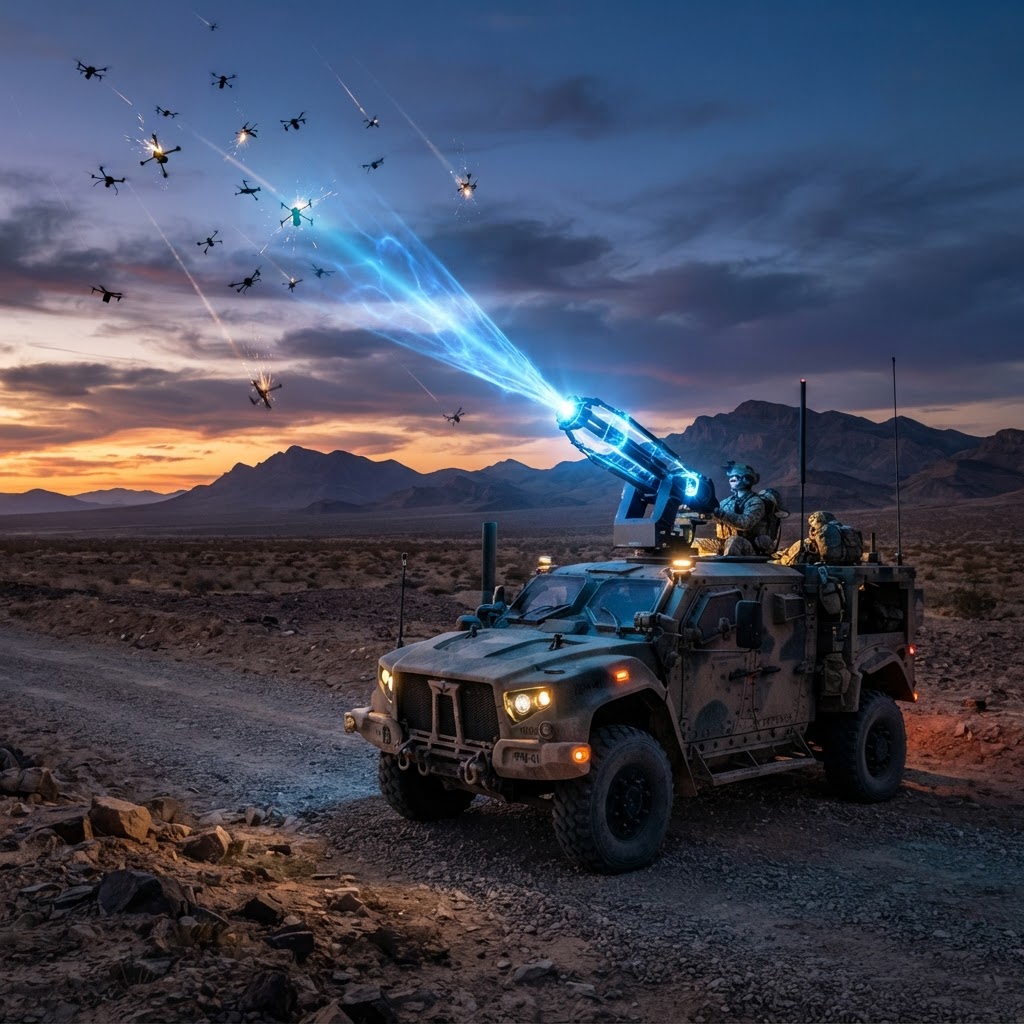
The era of relying solely on expensive kinetic interceptors to stop low-cost drones is effectively over. As of September 2026, the U.S. military is aggressively accelerating the deployment of directed energy weapons, specifically high-power microwave (HPM) systems, to handle the reality of dense, multi-domain drone swarms. Unlike traditional missiles, HPM technology offers a reusable, cost-effective 'hard-kill' layer that disrupts the internal electronics of incoming threats instantly. Systems like the Discombobulator HPM weapon are now at the forefront of this transition, providing commanders with the ability to neutralize entire swarms without depleting precious missile inventories.
From Defense to Offensive SEAD
While most headlines focus on defensive applications, the true potential of HPM lies in its versatility. We are seeing a pivot where counter-drone HPM systems are being adapted for offensive roles, including Suppression of Enemy Air Defenses (SEAD) and Destruction of Enemy Air Defenses (DEAD). By mounting these emitters on agile platforms, forces can project a 'bubble' of electromagnetic interference that blinds enemy sensors and disrupts command and control nodes in real-time. This is not just about stopping a quadcopter; it is about dominating the electromagnetic spectrum warfare environment to clear a path for friendly assets.
Key Developments in 2026
Recent milestones highlight the rapid maturation of microwave and laser technologies:
The U.S. Marine Corps recently awarded an $11 million contract for the HAVOC program, focusing on autonomous HPM vehicle integration.
Lockheed Martin’s MORFIUS X-Rotor has demonstrated the ability to neutralize over 50 drones in a single flight.
The U.S. Army is moving toward making high-energy lasers a permanent, program-of-record fixture in its air defense architecture.
Global competitors, including China with its Hurricane 3000 system, have signaled that HPM is now a standard component of modern air defense.
The Human Element in the Loop
Technology is only as good as the operator behind the screen. As we integrate drone-mounted electronic warfare into the field, the burden of threat assessment becomes increasingly complex. Operators must distinguish between civilian traffic and hostile swarms in seconds. This is why Silent Pulse Labs emphasizes intuitive interfaces that allow for rapid decision-making under pressure. Whether you are deploying an acoustic disorientation system or a full-scale microwave pulse, the goal remains the same: maintaining the initiative in an increasingly crowded sky.
Looking Ahead
The next 36 months will be critical as these systems move from experimental prototypes to sustained operational fielding. We are watching the integration of these platforms closely as they redefine the cost-exchange ratio of modern conflict. If you are interested in learning more about how our HPM solutions are shaping the future of the battlefield, please contact Silent Pulse Labs to discuss our latest integration capabilities.