Microwave Warfare: The Rise of Airborne HPM Against Drone Swarms
As drone swarms evolve, the military is shifting toward airborne high-power microwave systems to neutralize threats at scale. We examine the latest developments in HPM technology.
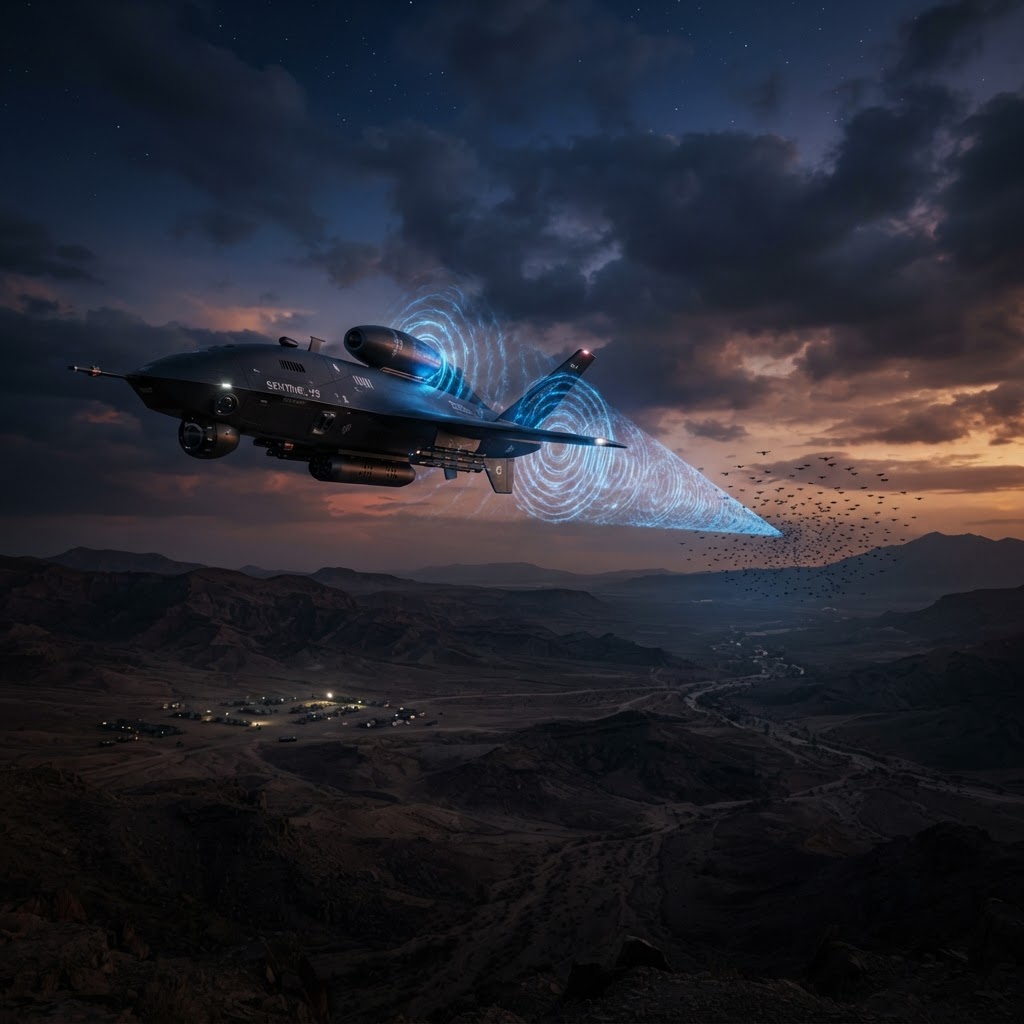
The Shift to One-to-Many Neutralization
The era of one-missile-per-drone is effectively over. With the proliferation of low-cost, autonomous swarms, defense planners are pivoting toward high-power microwave (HPM) systems that can disable dozens of targets in a single burst. By flooding the electromagnetic environment with concentrated energy, these systems fry the internal electronics of hostile UAS without the need for expensive kinetic interceptors. At Silent Pulse Labs, our Discombobulator HPM weapon is leading this charge, providing a scalable solution that functions as both a defensive shield against incoming swarms and an offensive tool for SEAD/DEAD missions.
Airborne Capabilities and New Platforms
Recent developments, such as the unveiling of the MORFIUS X-Rotor, highlight the industry's push to take HPM off the ground and into the air. By mounting microwave emitters on aerial platforms, operators can achieve better line-of-sight and engagement angles against low-flying threats. This mobility is critical for counter-drone HPM systems that need to protect maneuver forces in contested environments. When integrated with advanced command and control suites, these airborne assets can identify and neutralize threats before they reach the perimeter, effectively turning the tide of electromagnetic spectrum warfare.
Comparison of Modern HPM Approaches
Different platforms offer unique advantages for deploying directed energy weapons against modern UAS threats.
| SYSTEM TYPE | PRIMARY PLATFORM | KEY ADVANTAGE | PRIMARY MISSION |
|---|---|---|---|
| Ground-Mobile | Tactical Vehicles | High Power Density | Point Defense |
| Airborne | UAV/Drone | Engagement Range | Swarm Neutralization |
| Modular Sled | Universal Mount | Platform Agnostic | Expeditionary Ops |
Key Advantages of HPM Integration
Why militaries are prioritizing HPM over traditional interceptors:
One-to-many engagement capability against dense swarms.
Reduced cost-per-kill compared to precision missiles.
Minimal collateral damage through precise energy focusing.
Ability to neutralize 'dark' or AI-controlled drones that lack traditional RF signatures.
Rapid reusability for sustained defensive operations.
Looking Ahead
As we look toward 2027, the integration of drone-mounted electronic warfare will only become more sophisticated. The ability to perform real-time threat assessment and adjust microwave output dynamically is the next frontier. Whether you are looking to harden your existing infrastructure or explore the latest in directed energy, we are here to help navigate these complex requirements. To learn more about how our systems can integrate into your current architecture, please contact Silent Pulse Labs.