The Swarm Math Problem: Why Turkey’s 20-Drone Live-Fire Test Changes the Calculus of Attrition
Turkey's recent 20-drone live-fire exercise with KARGU loitering munitions signals a shift from experimental swarms to operational reality, forcing a rethink of electronic warfare and short-range air defense.
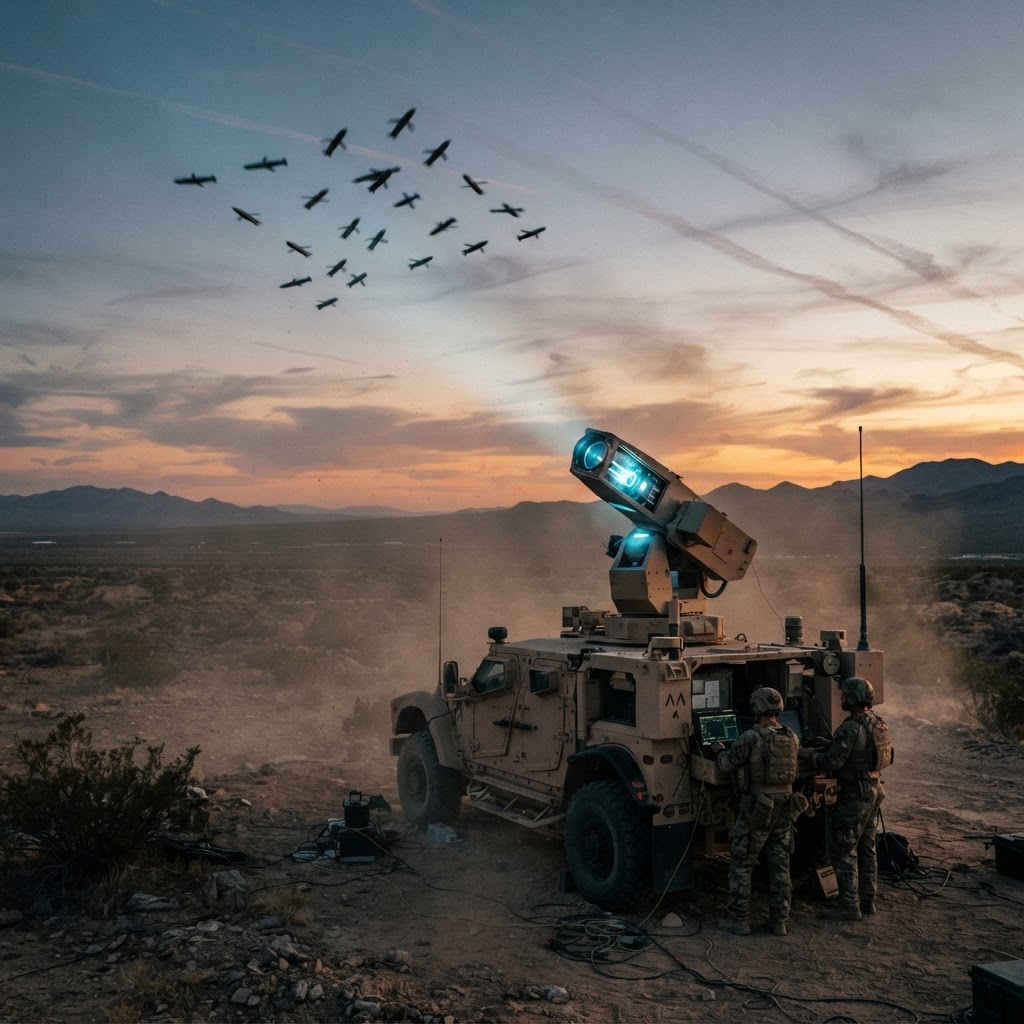
The Saturation Point: STM’s 20-Drone Statement
The math of modern air defense just got significantly more expensive. In a recent live-fire demonstration, Turkish defense firm STM successfully deployed a swarm of 20 KARGU loitering munitions, proving that coordinated, autonomous strike groups are no longer a laboratory curiosity but a frontline reality. By splitting the swarm to engage three separate targets simultaneously, the test highlighted a critical vulnerability in current short-range air defenses (SHORAD): saturation. When twenty attackers arrive at once, even the most advanced kinetic systems run out of barrels or missiles before the sky is clear. This isn't just about numbers; it's about 'target partitioning,' where the swarm handles its own routing and deconfliction, allowing a single operator to authorize effects that previously required a whole platoon.
Why Traditional Jamming is Losing the War of Attrition
For the last few years, electronic warfare (EW) has relied on jamming the link between the pilot and the drone. However, the battlefield is evolving faster than the jammers. We are seeing a surge in autonomous navigation—like the KERKES integration used by STM—which allows drones to function in GNSS-denied environments. Even more concerning for defenders is the rise of fiber-optic guided drones. These 'un-jammable' platforms trailing miles of glass thread are immune to traditional radio-frequency interference. When you combine autonomy with physical wire-control, the standard EW toolkit becomes a collection of expensive paperweights. The defender’s dilemma is now a matter of physics: how do you stop a machine that doesn't need to 'hear' a command signal to kill you?
Enter the Discombobulator: A Microwave Veto
This is where counter-drone HPM systems change the game. Unlike lasers that must dwell on a single target for several seconds, or kinetic interceptors that are one-and-done, high-power microwave (HPM) technology offers a wide-area 'cone of silence.' Our own Discombobulator HPM weapon is designed specifically for this saturation problem. By emitting intense bursts of electromagnetic energy, it doesn't just jam a signal; it physically disrupts the circuitry of every drone within its field of fire. Whether the drone is controlled via radio, autonomous AI, or the increasingly popular fiber-optic links, the physics of HPM remains the same: if it has a circuit board, it can be fried. It is the ultimate 'soft-kill' veto against the swarm math problem.
Flipping the Script: HPM as an Offensive Tool
While much of the focus remains on defense, the Discombobulator is proving equally potent on the attack side. In the context of electromagnetic spectrum warfare, we are seeing a shift toward using drone-mounted HPM for offensive SEAD (Suppression of Enemy Air Defenses) and DEAD (Destruction of Enemy Air Defenses) missions. A drone equipped with a Discombobulator payload can loiter near an enemy radar installation or a command node and, without firing a single kinetic round, render the entire battery blind. This capability allows for the degradation of integrated air defense systems (IADS) while minimizing the risk of detection. By frying the 'eyes' of the enemy from a drone-mounted platform, forces can clear a path for follow-on strikes without the high cost and risk of traditional manned SEAD sorties.
The 2026 Outlook: Speed, Scale, and Spectrum
The STM test is a harbinger of a much larger shift. As jet-powered loitering munitions like Ukraine’s 'Bars' push ranges to 800km and swarm sizes grow from 20 to 200, the window for human intervention is closing. The future of the 'Discombobulator Blog' will likely be dominated by this tension between autonomous mass and directed energy response. We are moving into an era where the electromagnetic spectrum is the primary terrain of conflict. Success will not be measured by who has the most drones, but by who can most effectively control the energy that powers them. The swarm is a math problem, and HPM is the eraser that simplifies the equation.
Get in Touch
The landscape of drone warfare is shifting beneath our feet every day. If you are looking to integrate high-power microwave solutions into your defense architecture or want to learn more about our latest field tests, please contact Silent Pulse Labs to speak with one of our systems engineers.