Army Enters Production Era: The $465M Laser Weapon Milestone
The U.S. Army has awarded its first-ever production contract for directed-energy weapons, signaling a shift from prototype testing to operational deployment.
From Prototype to Production
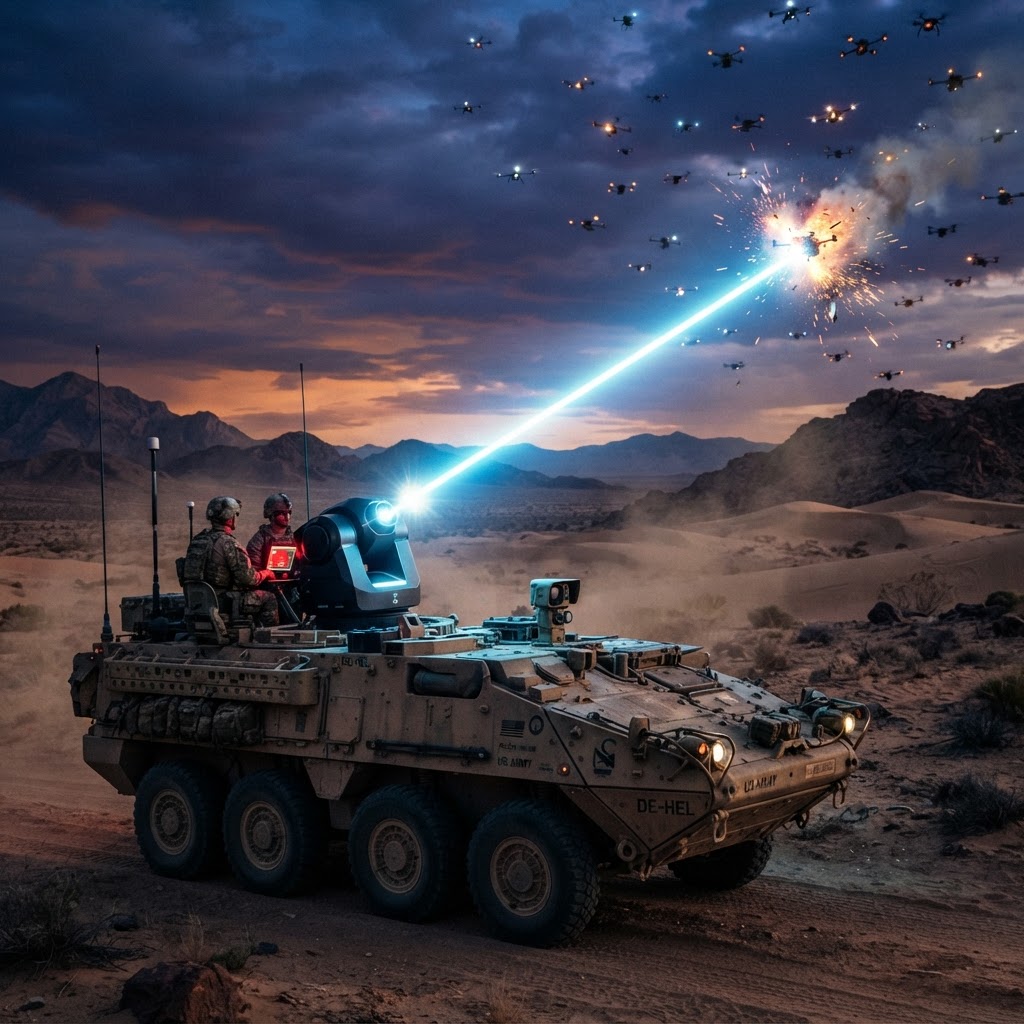
The U.S. Army has officially crossed the threshold from experimental testing to full-scale procurement of directed-energy weapons. As of September 3, 2026, the service has awarded a $464.8 million contract to AeroVironment for the production of the LOCUST X3 high-energy laser system. This landmark deal for the Enduring High Energy Laser (E-HEL) program marks the first time the Pentagon has moved a laser weapon system into a formal production cycle, signaling that the era of 'demonstrator' technology is effectively over.
The Shift in Air Defense
For years, the military has relied on kinetic interceptors—missiles that cost significantly more than the drones they destroy. The E-HEL program changes this calculus by providing a deep, rechargeable magazine of energy. While lasers offer precision, the broader electromagnetic spectrum warfare landscape requires a layered approach. This is where systems like the Discombobulator HPM weapon become critical. Unlike lasers, which engage targets one by one, high-power microwaves can neutralize entire swarms by inducing catastrophic electronic failure across multiple platforms simultaneously.
Operational Versatility
The LOCUST X3 is designed for integration onto mobile platforms like the Joint Light Tactical Vehicle, ensuring that maneuver forces are not left vulnerable to loitering munitions or surveillance drones. However, the effectiveness of these systems relies heavily on the command and control architecture that manages the engagement. Whether utilizing a laser for a surgical strike or deploying drone-mounted electronic warfare to suppress enemy air defenses (SEAD), the goal remains the same: maintaining the initiative in a contested environment. By integrating these tools, commanders can perform a rapid threat assessment and choose the most efficient effector for the specific target profile.
Key Advantages of the New Procurement
The transition to production provides the following operational improvements:
Cost-per-shot reduction compared to traditional kinetic interceptors.
Increased magazine depth, allowing for sustained engagement against massed drone swarms.
Modular architecture that supports rapid field upgrades and maintenance.
Enhanced survivability for maneuver units through mobile, non-kinetic defense.
Looking Ahead
As the Army begins fielding these systems, the focus will shift toward refining the integration of counter-drone HPM systems and laser platforms into existing air defense networks. The success of this $465 million investment will likely dictate the pace of future procurement for other non-kinetic technologies. If you are interested in learning more about how Silent Pulse Labs is shaping the future of directed energy and electronic defense, please contact Silent Pulse Labs to discuss our latest developments.