L3Harris Delivers First Viper Shield EW Suites: A New Era of Digital Armor for the F-16
L3Harris Technologies has completed the first production run of the Viper Shield electronic warfare suite, providing F-16 Block 70/72 aircraft with advanced digital countermeasures and situational awareness.
Digital Armor Reaches the Fleet
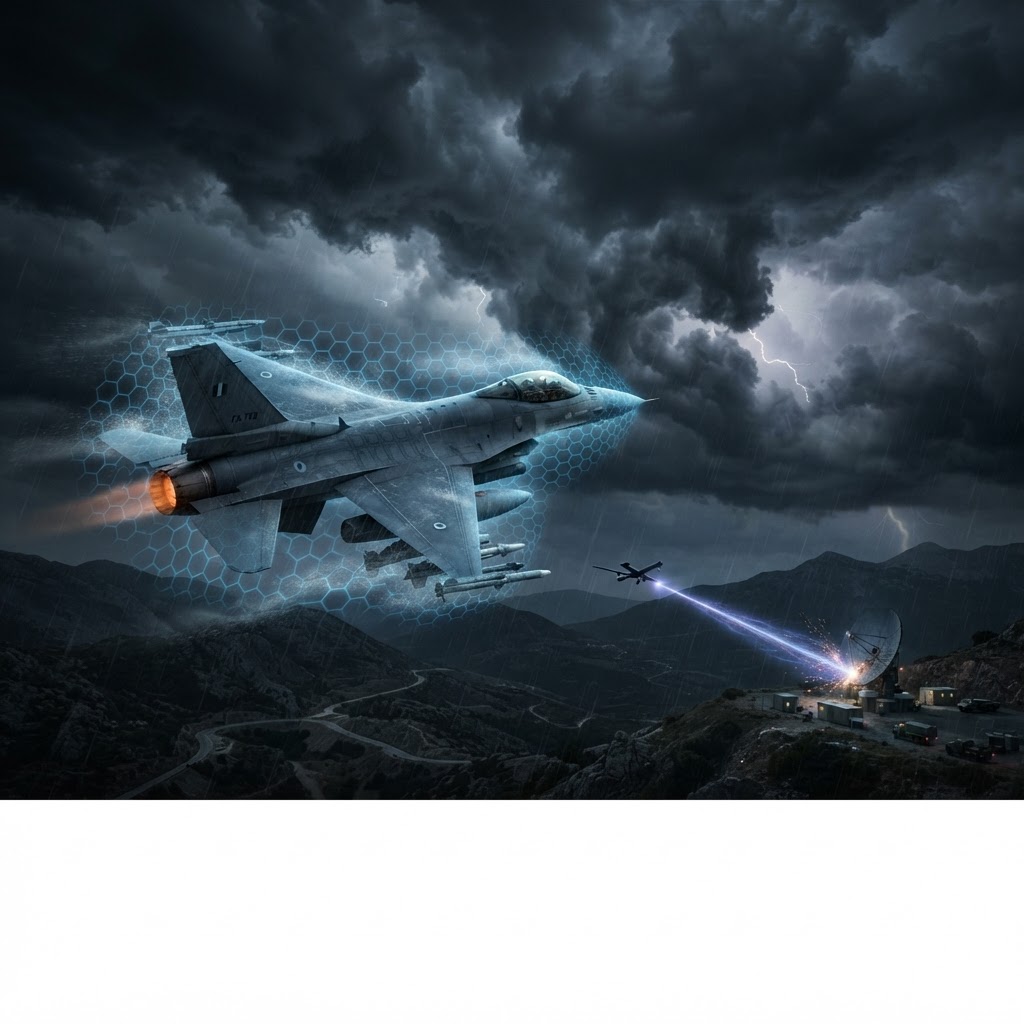
L3Harris Technologies announced on September 3, 2026, that it has successfully completed the production of the first 35 Viper Shield electronic warfare (EW) and countermeasure systems. This milestone marks a significant shift in how the global F-16 fleet will navigate increasingly contested environments. The Viper Shield, officially designated as the AN/ALQ-254(V)1, is designed to provide a 'digital armor' around the aircraft, allowing pilots to detect, identify, and counter sophisticated electronic threats in real-time. This initial batch is destined for international partners operating the Block 70/72 F-16 variants, though the system's architecture is designed for broad compatibility across the platform's legacy blocks.
Software-Defined Dominance
The technical core of the Viper Shield lies in its all-digital, software-defined architecture. Unlike older analog systems that required hardware overhauls to address new threats, Viper Shield utilizes commercial-off-the-shelf (COTS) technology to ensure rapid adaptability. This design significantly reduces the system's weight and physical footprint while maximizing its processing power. A critical feature of the suite is its seamless interoperability with the APG-83 Active Electronically Scanned Array (AESA) radar. By sharing data across the electromagnetic spectrum, the system ensures that the pilot maintains a clear tactical picture even when the environment is saturated with noise and deception. This level of integration is essential for modern electromagnetic spectrum warfare, where the speed of data processing often determines the victor.
Bridging the Gap with Directed Energy
While the Viper Shield provides a robust defensive envelope for manned fighters, the tactical landscape is increasingly shifting toward unmanned platforms capable of both protection and aggression. This is where systems like our Discombobulator HPM weapon come into play. While Viper Shield focuses on sensing and jamming to protect the host aircraft, the Discombobulator utilizes high-power microwave (HPM) energy to physically disrupt the internal electronics of incoming threats. In a defensive role, these counter-drone HPM systems provide a non-kinetic solution to swarm attacks that might otherwise overwhelm traditional kinetic defenses. The synergy between digital armor on manned jets and HPM effectors on unmanned wingmen creates a multi-layered defense that is difficult to penetrate.
Offensive Electronic Attack and SEAD
The evolution of electronic warfare isn't limited to defense. The same technology that protects a jet can be weaponized to dismantle an adversary's integrated air defense system (IADS). The Viper Shield provides the situational awareness necessary for these missions, but the heavy lifting of Suppression of Enemy Air Defenses (SEAD) and Destruction of Enemy Air Defenses (DEAD) is increasingly being offloaded to specialized effectors. The Discombobulator is uniquely suited for these offensive electronic attacks. By mounting the HPM payload on a drone, operators can fly directly into the teeth of enemy radar coverage, using focused microwave bursts to 'fry' sensitive components without firing a single missile. This approach preserves expensive kinetic munitions for high-value targets while effectively blinding the enemy's ability to sense and respond.
A Global Standard for the F-16
The completion of these first 35 units is just the beginning of a massive rollout. L3Harris has already secured orders for 233 units from eight different nations, signaling a global consensus on the necessity of digital EW suites. As the F-16 continues to serve as the backbone of many air forces, these upgrades ensure the platform remains relevant against near-peer adversaries who have invested heavily in signal-denial and advanced tracking technologies. The ability to reprogram these systems in the field—reacting to a new threat waveform in hours rather than months—is the new baseline for survival in the modern theater. If you are interested in how these technologies can be integrated into your existing platforms, please contact Silent Pulse Labs to discuss our latest EW and HPM solutions.