L3Harris Completes First 35 Viper Shield Electronic Warfare Systems as Global Air Defense Shifts Non-Kinetic
L3Harris has rolled out the first 35 Viper Shield all-digital electronic warfare suites for global F-16 fleets, signaling a fast pivot to software-defined RF countermeasures and layered non-kinetic air combat.
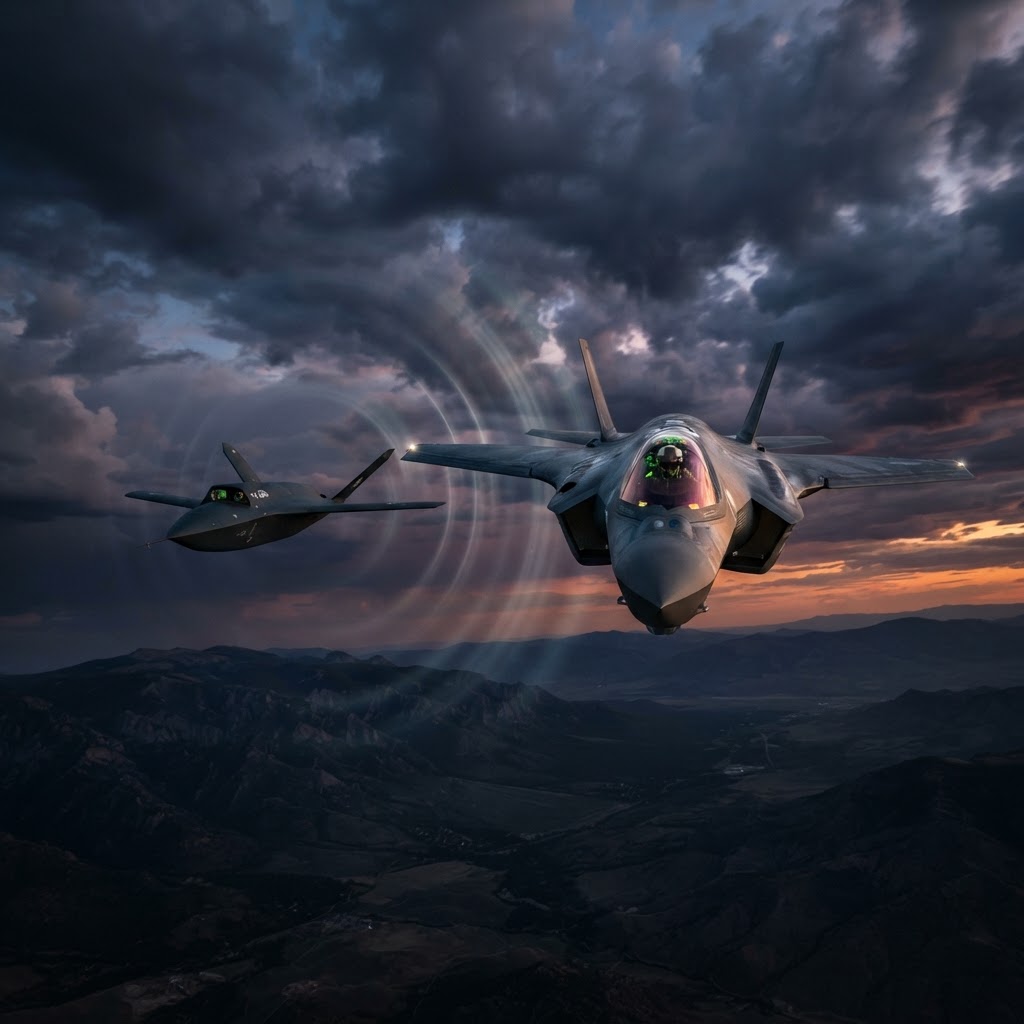
Production Milestone: First 35 Viper Shield Suites Roll Off the Line
L3Harris Technologies announced the completed production of its initial 35 Viper Shield electronic warfare (EW) and countermeasure systems tailored for international F-16 Fighting Falcon fleets, marking a major transition toward software-defined digital shielding in heavily contested airspace. The company assembled both internal shipsets and its first fully integrated external pod using production-line hardware at its Clifton, New Jersey facility. With roughly $1 billion committed by eight allied nations to finance development, laboratory verification, and flight trials, L3Harris is actively ramping up to execute a backlog of 233 baseline systems. Viper Shield introduces an all-digital, commercial-off-the-shelf (COTS) open architecture designed to defeat radar tracking, missile locks, and electronic interference across modern multi-threat operational environments.
Digital Armor and the Software-Defined Advantage
Built primarily around the advanced Block 70/72 F-16 variant, Viper Shield interfaces seamlessly with Northrop Grumman's APG-83 Active Electronically Scanned Array (AESA) radar, ensuring that internal jamming does not blind onboard situational awareness. Unlike legacy analog EW packages that required physical module swaps to counter new adversarial waveforms, Viper Shield operates on a software-defined radio (SDR) baseline. This allows operators to push dynamic algorithm updates into the receiver-exciter architecture as soon as adversary emitters evolve. By driving down physical size, weight, and power (SWaP) penalties, the compact hardware delivers broad-spectrum detection, automated threat prioritization, and pinpoint RF countermeasure techniques without impeding combat airframe maneuverability.
Bridging Jet-Mounted Jamming and Unmanned Non-Kinetic Attack
While digital self-protection preserves crewed fast jets against integrated air defense systems (IADS), modern electronic conflicts demand aggressive non-kinetic options that reach beyond defensive radar denial. In dense threat sectors where radio-frequency jamming meets autonomous guidance, advanced air wings increasingly look to drone-mounted electronic warfare platforms to push the tactical perimeter outward. Mating fast airborne platforms with uncrewed forward escorts allows operators to conduct dynamic threat assessment in congested spectrums without putting human crews into lethal envelopes. Crucially, as adversaries deploy smart swarms and hardened seekers that resist standard continuous-wave RF jamming, directed-energy solutions have become indispensable.
The Discombobulator: High-Power Microwave for C-UAS and Strike Support
This convergence of spectral defense and physical disruption is where directed-energy payloads change operational geometry. Silent Pulse Labs has pioneered the Discombobulator HPM weapon, an airborne high-power microwave effector that delivers dual-role dominance. In defensive operations, the Discombobulator functions among agile counter-drone HPM systems, instantly neutralizing coordinated multi-drone incursions by overloading receiver chips, flight computers, and motor control electronics simultaneously without firing a missile. Offensively, the Discombobulator serves as an airborne asset for Suppression and Destruction of Enemy Air Defenses (SEAD/DEAD). Flown ahead of strike formations on survivable unmanned platforms, it emits directed, nanosecond bursts that permanently fry radar transceiver circuitry and perimeter command nodes, dismantling defensive arrays before conventional packages arrive.
Next-Generation Electromagnetic Superiority
The rollout of the first 35 Viper Shield systems confirms that 21st-century survival hinges on controlling electrons rather than simply absorbing kinetic impacts. As front-line air arms modernize their 4th-generation fighters to match 5th- and 6th-generation battlespace requirements, the combination of onboard digital deception pods, distributed autonomous sensing, and uncrewed directed-energy strike guarantees high-probability survivability against advanced adversaries.
To discover how high-power microwave systems and software-defined electronic attack payloads can secure your aerial assets and base perimeters, contact Silent Pulse Labs to consult with our operational integration teams.